West Toronto
The Junction
The Junction grew up as a railway town and kept its character. Today its stretch of Dundas Street West is full of independent shops, restaurants and breweries, with solid old houses all around.
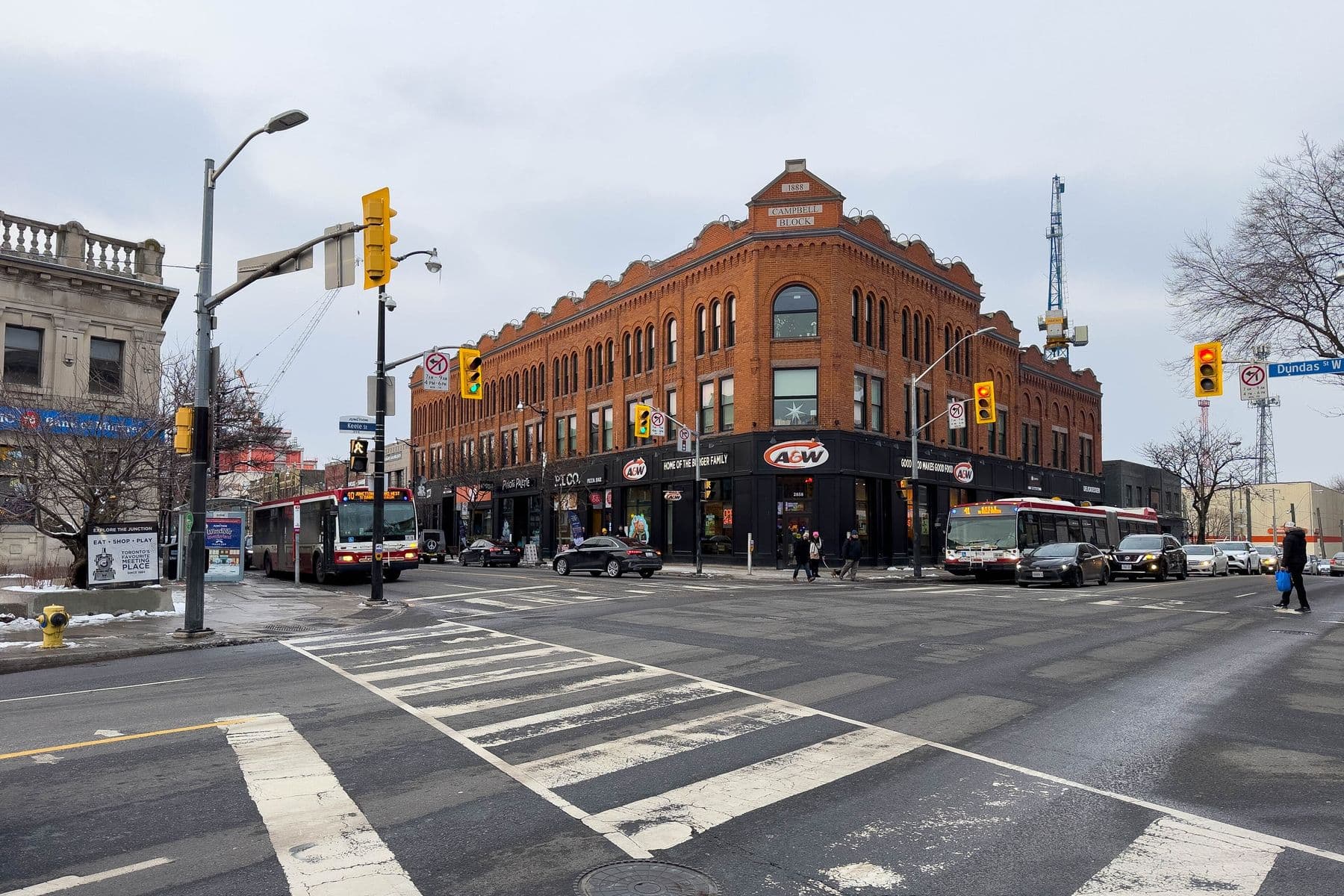
- Named for the railway lines that meet here
- Independent shops, restaurants and breweries on Dundas Street West
- An alcohol ban that lasted until 2000
- Victorian and Edwardian houses and newer townhouses
- Short trips to Line 2 and the Bloor GO and UP Express station
The Junction is centred on Dundas Street West around Keele Street, just north of High Park. It takes its name from the railway lines that meet here, and it has more history packed into a few blocks than most neighbourhoods twice its size.
What people love
The Junction developed as a railway town in the late 1800s. In the early 1900s, residents voted to ban the sale of alcohol, and parts of the area stayed dry for nearly a hundred years, until 2000. Since then, the main street has filled up with restaurants, bars, craft breweries, cafés and independent shops, many of them in old brick storefronts.
It still feels a little different from the rest of the west end: a bit more independent, a bit more of a small town inside the city. High Park is a short walk south, and the West Toronto Railpath, a walking and cycling trail along an old rail corridor, starts close by.
Getting around
- Subway: Dundas West and Keele stations on Line 2 are to the south, an easy bus ride or a longer walk down Dundas or Keele.
- GO and UP Express: Bloor GO station, next to Dundas West, is on the Kitchener GO line and the UP Express to Union Station and Pearson airport.
- Buses: TTC routes along Dundas Street West and Keele Street connect to the subway.
- Driving: the Gardiner Expressway is a short drive south.
Homes you'll find
- Victorian and Edwardian houses, detached, semi-detached and in rows, many with original brick and trim.
- Larger older homes on some of the residential streets off Dundas and Keele.
- Newer condos and stacked townhouses along the main roads and on former industrial sites.
The railway is part of the Junction's history and part of daily life. Some streets sit close to busy rail lines, so I always suggest visiting a home at a few different times of day to hear what it's like.
Good to know
- Toronto land transfer tax applies on top of Ontario's. See how land transfer tax works.
- Schools: use the TDSB and TCDSB school locators for the exact address.
- Heritage: the City has been studying the Junction's main street for heritage protection. If you're buying a main-street building, check the City's heritage register for that address.