Neighbourhoods
Oakville
Oakville is a lakeside town with a historic harbour downtown, leafy older streets near the water and newer family neighbourhoods further north, all with an easy GO train ride to Toronto.
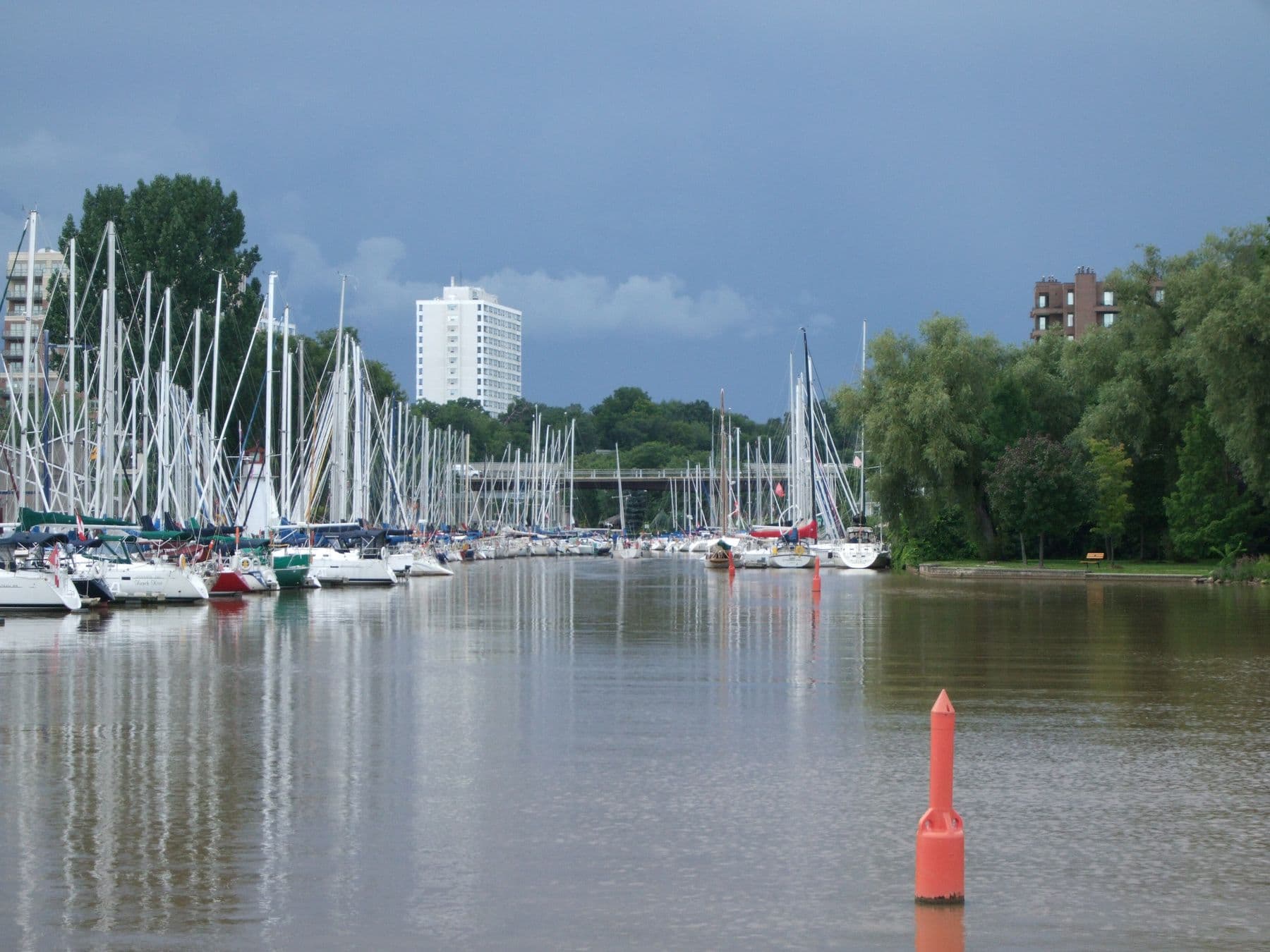
- Harbours at downtown Oakville and Bronte
- Sixteen Mile Creek and its valley trails
- A historic downtown along Lakeshore Road
- Oakville and Bronte GO stations on the Lakeshore West line
- Bronte Creek Provincial Park on the west side
Oakville sits on Lake Ontario between Mississauga and Burlington, in Halton Region. It was laid out in the 1800s around a harbour at the mouth of Sixteen Mile Creek, and that old core is still the heart of the town.
What people love
- Two harbours. Downtown Oakville has its harbour at the mouth of Sixteen Mile Creek, and Bronte, in the west end of town, has its own harbour and village main street.
- Downtown. Lakeshore Road through downtown Oakville has shops, restaurants and cafés, with Lakeside Park and the Oakville Museum at Erchless Estate right by the water.
- Creeks and trails. Sixteen Mile Creek, Fourteen Mile Creek and other creeks cut through town, with trails and wooded valleys along them. Glen Abbey's ravine trails are a big draw for walkers and cyclists.
- Big parks. Bronte Creek Provincial Park, on the west side of town, has trails, open fields and picnic areas.
For a lot of buyers, the appeal is the mix: a real downtown, the lake, lots of green space, and a commute to Toronto by GO train or the QEW.
Getting around
- GO trains: Oakville and Bronte stations are on the Lakeshore West line, with all-day trains to Union Station downtown and west toward Burlington and Hamilton.
- Local transit: Oakville Transit buses connect neighbourhoods to the GO stations.
- Driving: the QEW runs through the middle of town, Highway 403 joins it in the east, and the 407 ETR crosses the north.
Homes you'll find
- Nineteenth-century homes and lakeside cottages in Old Oakville and around downtown, many in heritage districts.
- Postwar bungalows and split-levels from the 1950s and 1960s on many streets south of the QEW, some now replaced by large custom homes.
- Two-storey detached homes and townhouses from the 1970s through the 1990s in areas like Glen Abbey, River Oaks and Clearview.
- Newer communities north of Dundas Street, with detached homes, townhouses and some mid-rise buildings.
- Condos near the GO stations, downtown and in Bronte.
Because Oakville grew in waves, the age of a home usually tells you what to check. Older houses near the lake deserve a close look at foundations, wiring and plumbing. Homes from the 1980s and 1990s are often due for new roofs, windows and furnaces. A home inspection is how we find out before you're committed.
Good to know
- Ontario land transfer tax only. Oakville is outside the City of Toronto, so there's no Toronto land transfer tax. Here's how land transfer tax works.
- Schools go by address. Use the Halton District School Board and the Halton Catholic District School Board school locators for the exact address.
- Heritage districts. Oakville has four heritage conservation districts, mostly around the old downtown. Exterior changes there can need approval from the Town, so check before you plan a renovation.
- Property taxes are set by the town and region, so compare the actual bill on any home you're considering. Here's how property taxes work.
Explore Oakville: Glen Abbey · Old Oakville